
There’s nothing quite like the savory aroma of a stir-fry wafting through the kitchen as dinner approaches. I found myself in desperate need of a meal that was both satisfying and quick to prepare during a busy weeknight when I decided to whip up this Homemade Mongolian Beef. It’s truly a gem of a recipe—ready in just 30 minutes and bursting with flavor.
With tender beef caramelized to perfection alongside vibrant veggies, the combination of garlic, ginger, and a touch of sweetness creates a dish that feels both comforting and wholesome. Whether you serve it over rice, quinoa, or your favorite noodles, it’s a crowd-pleaser that brings a taste of Asian cuisine right to your dinner table.
Better yet, this recipe is not only easy to make, but there’s also flexibility built-in for dietary preferences, thanks to options like gluten-free soy sauce! Join me as we make a dish that will make fast food a faint memory, bringing warmth and joy back into your cooking routine.
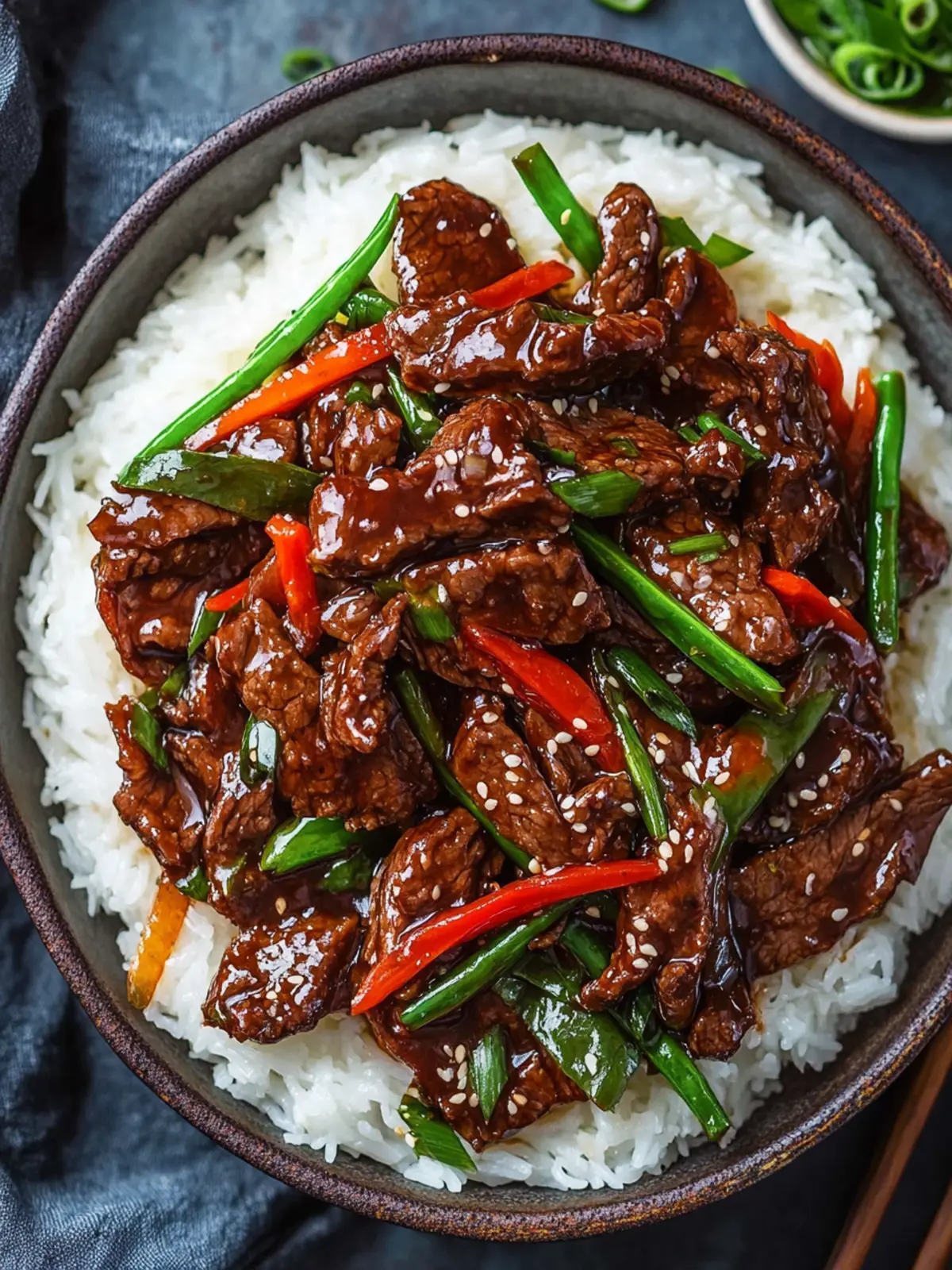
Why is Mongolian Beef a must-try?
Quick Preparation: This 30-minute meal is perfect for busy weeknights when you crave something delicious without spending hours in the kitchen.
Flavor Explosion: The vibrant mix of garlic, ginger, and a hint of sweetness creates a mouthwatering sauce that elevates each bite.
Crowd-Pleasing: Family and friends will rave about this recipe, making it a go-to for gatherings and special occasions.
Versatile Options: Easily adapt it to suit your dietary needs—whether gluten-free with Tamari or swapping beef for chicken or tofu, the possibilities are endless!
Simple Ingredients: With common ingredients likely found in your pantry, whipping up this dish feels hassle-free, allowing even novice cooks to shine.
Mongolian Beef Ingredients
For the Beef
• Flank Steak – This tender cut is ideal when sliced thin; it truly shines in this Mongolian Beef dish.
• Corn Starch – Coating the beef in corn starch gives it a crispy texture that’s delightful when stir-fried.
For the Vegetables
• Carrot – Adds a delightful crunch and natural sweetness; feel free to substitute with zucchini for a twist.
• Red Bell Pepper – Not only does it provide a pop of color, but its sweetness is perfect for balancing flavors.
For the Sauce
• Fresh Ginger – This ingredient brings warmth and a depth of flavor; ground ginger can be a fine substitute in a pinch.
• Garlic Cloves – Essential for flavor, garlic amps up the savory quality; swap for garlic powder if needed.
• Low-Sodium Soy Sauce – Adds rich umami without the excess salt; choose Tamari for a gluten-free option.
• Brown Sugar – Helps balance the savory elements with a hint of sweetness; feel free to use honey for an alternative.
• Water – Helps in creating the sauce’s perfect consistency; chicken or vegetable broth can enhance the flavor further.
• Sriracha – This ingredient adds a kick; adjust to taste for a milder or spicier dish.
For Cooking
• Unsalted Butter – Enhances flavors as you sauté the veggies; extra oil is a great dairy-free substitute.
• Neutral Oil – Ideal for high-heat cooking, options like canola or grapeseed oil work wonderfully here.
For Garnish
• Green Onions – For freshness and a touch of sharpness, they elevate the finished dish beautifully.
• Sesame Seeds – An optional garnish for added texture and nutty flavor; simply omit if you’re out!
How to Make Mongolian Beef
-
Prep the Beef: Coat thinly sliced flank steak in corn starch until each piece is fully covered. This will ensure a crispy texture when cooked.
-
Mix the Sauce: In a bowl, combine minced fresh ginger, minced garlic, brown sugar, water, low-sodium soy sauce, and Sriracha. Set this flavorful mixture aside for later.
-
Cook Vegetables: Heat a skillet or wok over medium-high heat and add neutral oil and unsalted butter. Stir-fry the carrots and red bell peppers until they are crisp-tender, then set them aside.
-
Sear the Beef: Increase the heat and add the remaining oil to the pan. Sear the beef slices for about 2 minutes on each side until they turn crispy and brown. Cook in batches if necessary to avoid overcrowding.
-
Combine: Return the sautéed vegetables to the pan, sprinkle in chopped green onions, and pour the prepared sauce over everything. Stir well and let it simmer until the sauce thickens, about 3 minutes.
-
Serve: Garnish with sesame seeds if desired and serve your delicious Mongolian Beef over rice, quinoa, or noodles for a hearty meal.
Optional: Add some steamed broccoli or green beans on the side for extra nutrition!
Exact quantities are listed in the recipe card below.
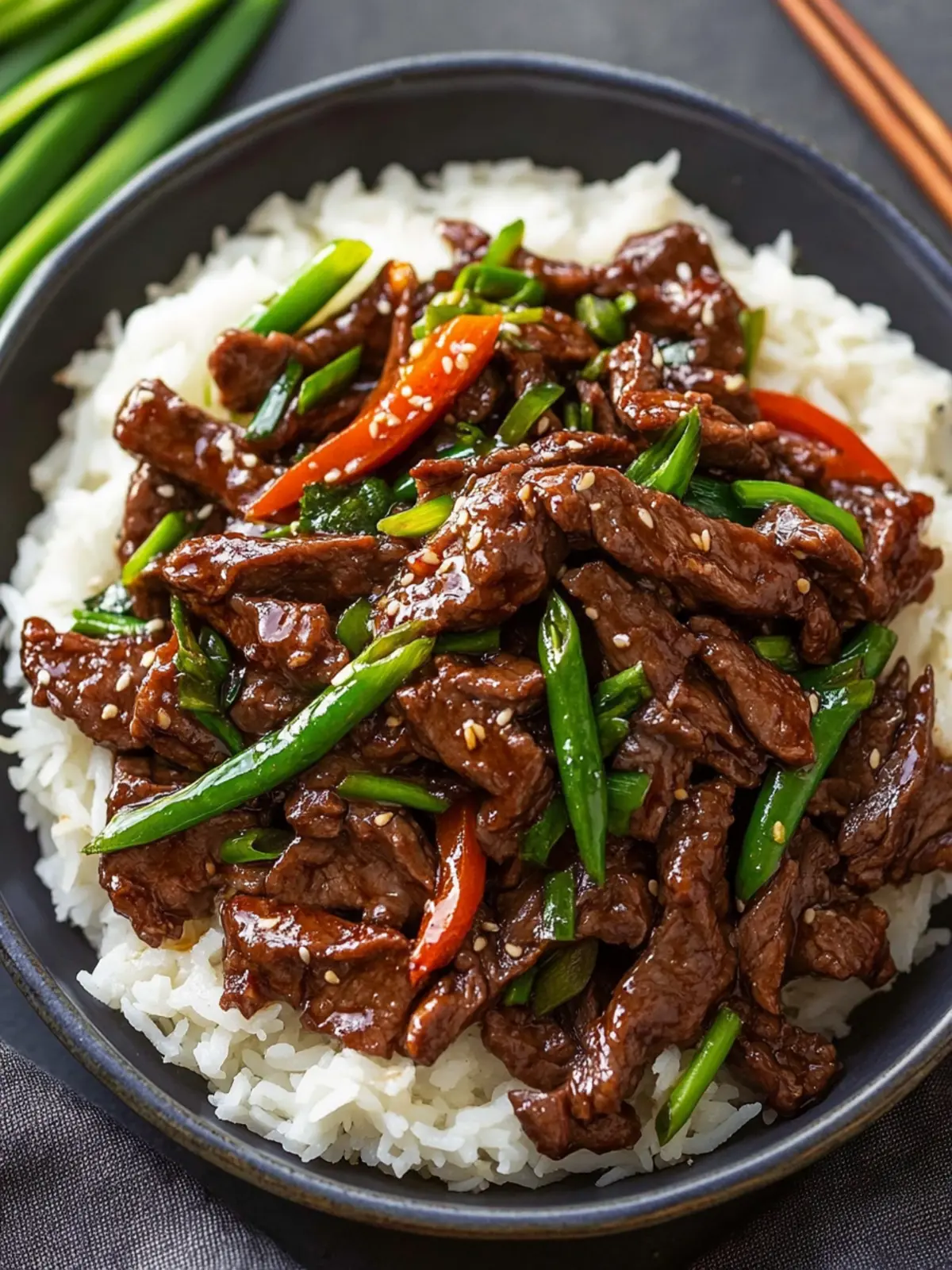
How to Store and Freeze Mongolian Beef
Fridge: Store leftovers in an airtight container for up to 3 days. It’s best to reheat gently on the stovetop to maintain the dish’s texture.
Freezer: For longer storage, freeze the Mongolian Beef in an airtight container for up to 2 months. Thaw in the fridge overnight before reheating.
Reheating: When ready to enjoy, reheat on medium-low heat in a skillet. Add a splash of water if the sauce thickens too much during freezing.
Quality Tip: To preserve the flavor, it’s best to store the beef separate from the vegetables if possible. This way, the veggies stay crisp and the beef juicy!
Make Ahead Options
These Homemade Mongolian Beef components are perfect for meal prep enthusiasts looking to save time during busy weeknights! You can slice and coat the flank steak in corn starch up to 24 hours in advance—simply store it in an airtight container in the refrigerator to maintain its crispy texture when cooked. Additionally, you can mix the sauce ahead of time; just keep it refrigerated for up to 3 days. When you’re ready to enjoy your meal, stir-fry the prepped vegetables and sear the beef as directed, then combine everything with the sauce for a delicious Eastern-inspired dish that tastes just as fresh as if made from scratch!
Expert Tips for Mongolian Beef
-
Slicing Technique: For perfect slices, freeze the flank steak for about 30 minutes. It makes cutting thin strips much easier!
-
Prep Ahead: Have all your ingredients prepped and measured before starting the cooking process. This dish cooks quickly, and you don’t want to be scrambling last minute!
-
Wok Wonders: Use a wok or heavy skillet for better heat retention. This helps achieve that beautiful crispy texture on the beef, key for delicious Mongolian Beef.
-
Sauce Timing: Add the sauce only after searing the beef to prevent it from burning. Let it simmer briefly to thicken while enhancing flavor.
-
Adjust the Heat: If you’re sensitive to spiciness, start with less Sriracha. You can always add more while cooking if desired.
What to Serve with Mongolian Beef?
Transform dinner into a delightful spread with these thoughtful pairings that elevate your meal experience.
-
Steamed Jasmine Rice: The fluffy texture of jasmine rice beautifully soaks up the savory sauce, making each bite a comforting experience.
-
Vegetable Fried Rice: Add a colorful medley of veggies and soy sauce to this classic, giving texture and flavor that complements the beef perfectly. A delightful twist that everyone will love!
-
Stir-Fried Broccoli: Crisp-tender broccoli adds a healthy, vibrant touch to your plate and contrasts nicely with the rich flavors of the beef, offering a refreshing crunch.
-
Crispy Egg Rolls: These crunchy bites filled with savory vegetables or meat make a fun side. They add an extra layer of flavor that fits beautifully with the Mongolian Beef theme.
-
Creamy Coconut Coleslaw: The creaminess balances the heat from the Sriracha, while the crunch of the slaw provides a wonderful texture contrast. Your family will appreciate this refreshing side!
-
Chilled Green Bean Salad: Tossed with sesame oil and a splash of vinegar, this salad brings brightness and crunch, complementing the meal while being easy to prepare ahead of time.
-
Sparkling Ginger Lemonade: The fizzy ginger lemonade marries well with the flavors of the beef, offering a refreshing sip that’s especially delightful with spicy dishes.
-
Vanilla Ice Cream: As a sweet conclusion, this classic dessert offers a creamy treat that cools the palate after your satisfying meal, making it the perfect endnote.
Mongolian Beef Variations & Substitutions
Get ready to explore delightful twists that make this recipe uniquely yours!
- Chicken: Swap out the beef for thinly sliced chicken breast for a lighter option that cooks just as quickly.
- Tofu: For a vegetarian delight, substitute flank steak with firm tofu, coated in corn starch for a crispy exterior.
- Vegetable Medley: Use a mix of broccoli, snap peas, and bell peppers for a vibrant, colorful vegetable stir-fry.
- Gluten-Free: Replace soy sauce with Tamari for a gluten-free version without compromising flavor.
- Maple Sweetness: Use maple syrup instead of brown sugar for a subtle, natural sweetness that complements the dish beautifully.
- Spice it Up: Add red pepper flakes or increase Sriracha for extra heat; adjust according to your spice tolerance!
- Flavor Infusion: Consider adding a splash of rice vinegar or mirin to the sauce for an extra zing of flavor.
- Crunchy Garnish: Toss in some chopped peanuts or cashews as a garnish for an added crunch that brings delightful texture.
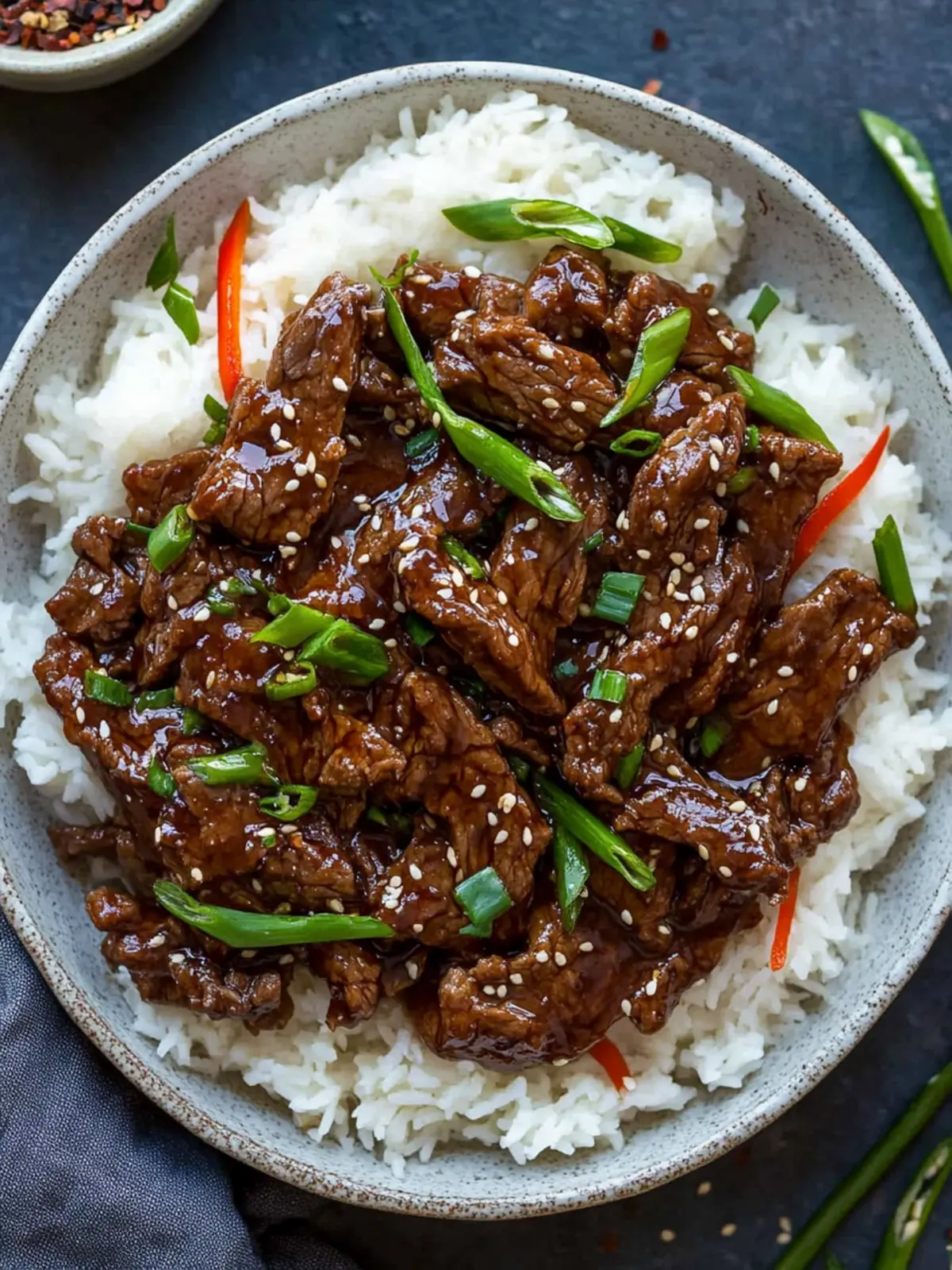
Mongolian Beef Recipe FAQs
What kind of beef should I use for Mongolian Beef?
For the best texture and flavor, flank steak is the ideal choice due to its tenderness when sliced thin. If you can’t find flank steak, top sirloin or rib eye make excellent substitutes. Just remember to slice against the grain for that melt-in-your-mouth experience!
How do I store leftovers of Mongolian Beef?
Absolutely! You can store your leftover Mongolian Beef in an airtight container in the refrigerator for up to 3 days. When reheating, I recommend gently warming it on the stovetop. This helps maintain the fabulous texture and keeps that scrumptious sauce intact.
Can I freeze Mongolian Beef?
Yes, indeed! To freeze Mongolian Beef, let it cool completely, then place it in an airtight container or freezer-safe bag. It can be frozen for up to 2 months. When you’re ready to enjoy it, thaw it overnight in the fridge before gently reheating on the stovetop. You might add a splash of water if the sauce has thickened too much during freezing.
What should I do if my sauce is too thick?
If your sauce turns out too thick, don’t worry! You can easily adjust it by adding a little bit of water or broth while reheating. Stir well until you achieve the desired consistency. A splash at a time will work wonders – just be patient!
Are there any allergies I should be aware of with Mongolian Beef?
Great question! Since the recipe includes soy sauce, it may not be suitable for those with soy allergies. For a gluten-free option, using Tamari is perfect. If you have any other allergies or dietary restrictions, you can also replace beef with tofu or a variety of vegetables for a nutritious vegetarian take.
How do I know when the beef is perfectly cooked?
To ensure your beef is perfectly cooked, look for a crispy exterior with a browned color – it should take about 2 minutes on each side over high heat. To maintain the best flavor, avoid overcrowding the pan, which can steam the beef instead of browning it. With practice, you’ll quickly recognize that beautiful, caramelized finish!
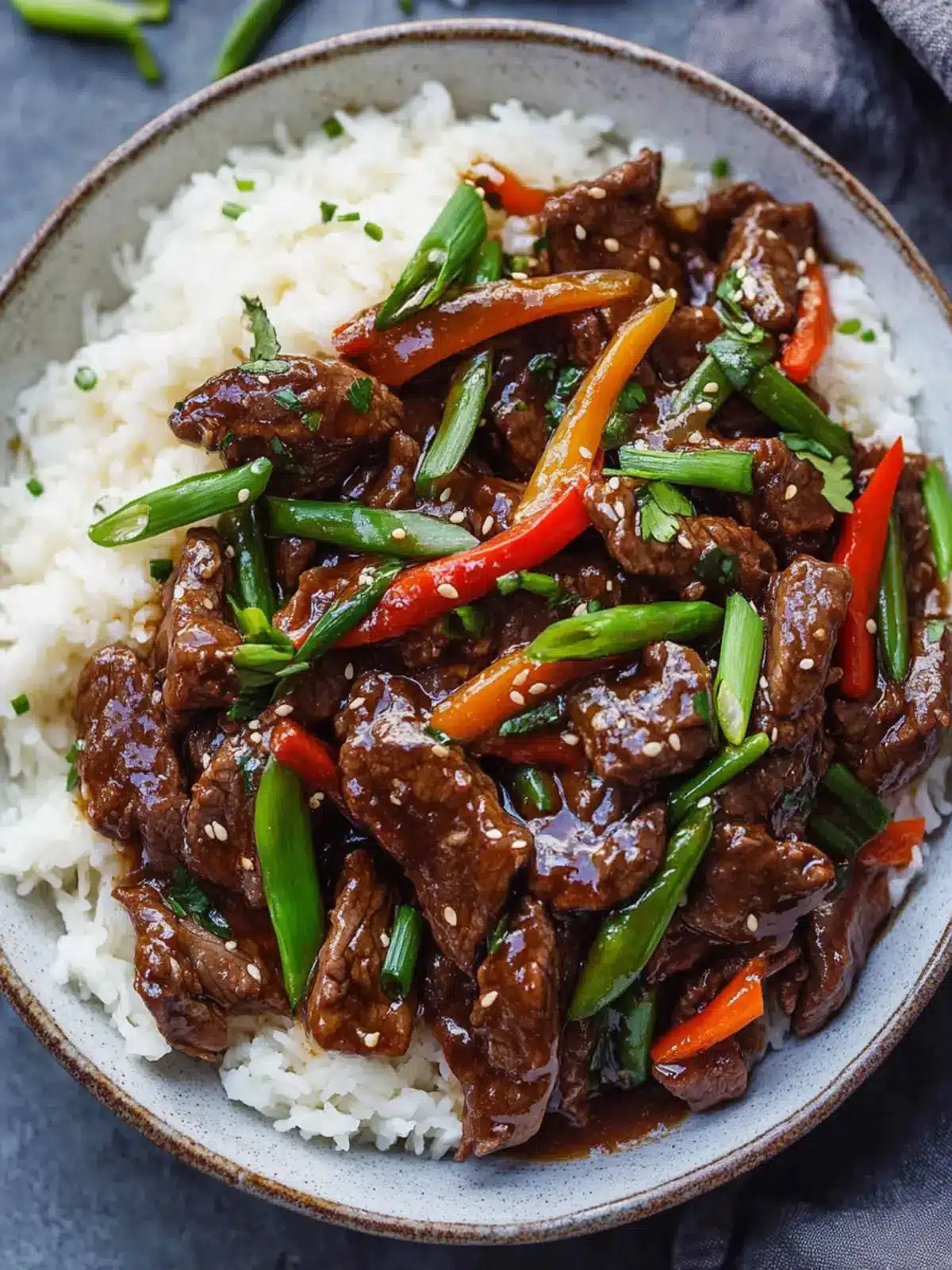
Savory 30-Minute Homemade Mongolian Beef You’ll Love
Ingredients
Equipment
Method
- Coat thinly sliced flank steak in corn starch until each piece is fully covered.
- In a bowl, combine minced fresh ginger, minced garlic, brown sugar, water, low-sodium soy sauce, and Sriracha. Set aside.
- Heat a skillet or wok over medium-high heat with neutral oil and unsalted butter. Stir-fry the carrots and red bell peppers until crisp-tender.
- Increase heat, add remaining oil, and sear the beef slices for about 2 minutes on each side until crispy and brown.
- Return sautéed vegetables to the pan, sprinkle in chopped green onions, and pour the prepared sauce over everything. Stir and let simmer until thickened.
- Garnish with sesame seeds if desired and serve over rice, quinoa, or noodles.